
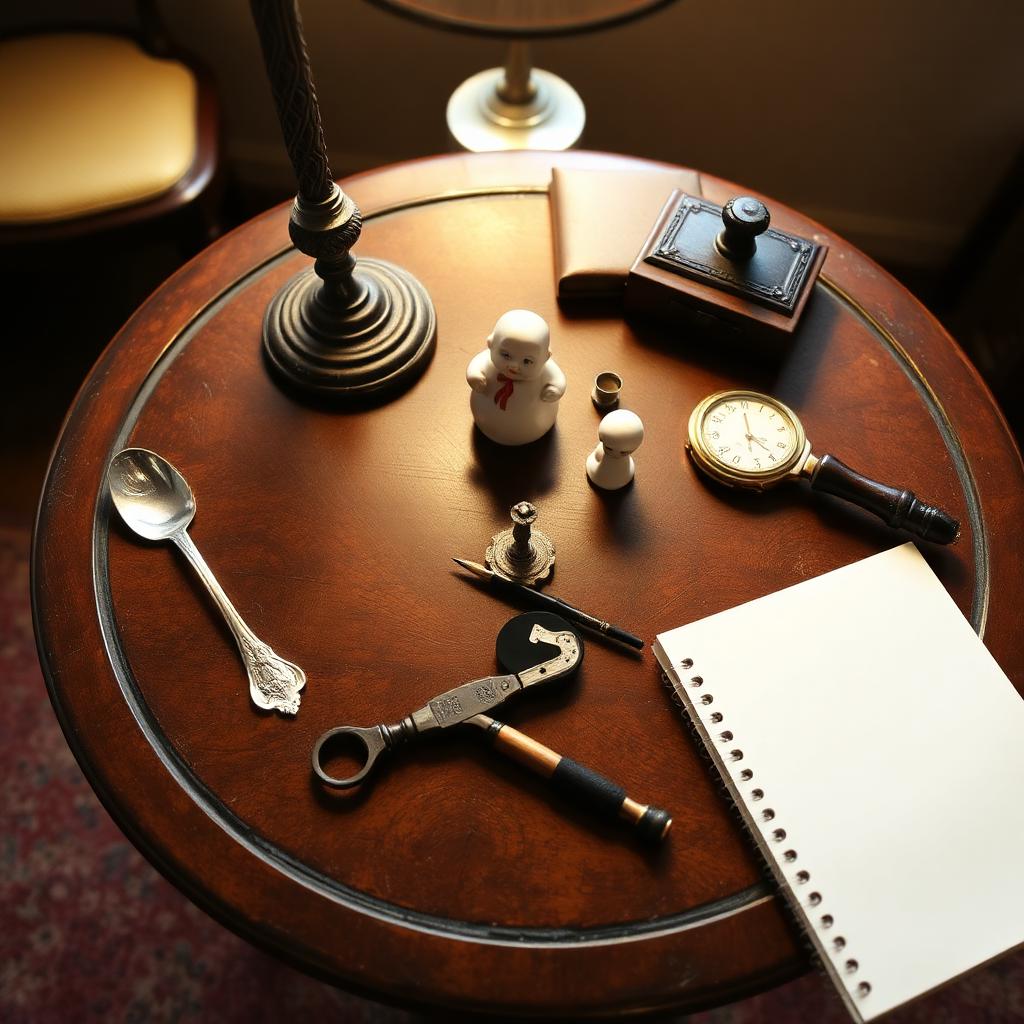
Opening, five minutes and a table full of objects
Picture a house clearance table covered in twenty mixed objects. If I gave you five minutes, where would you start? This is a real-world problem. Dealers don't get unlimited time. We make decisions quickly.
Introduction
People often imagine dealers spending hours researching every object. Sometimes we do, but first we need to decide whether an object deserves that time. That's where the five-minute assessment comes in.
This isn't about reaching a final conclusion. It's about deciding whether something deserves a closer look.
Step 1, What is it?
The first question isn't value. It isn't age. It's identification: category, purpose, material. You can't assess what you can't name. Spend the first thirty seconds simply naming the object out loud, in plain English.
Step 2, Is it worth picking up?
Professionals ignore far more than they handle. Opportunity cost is real. Time is finite. Focus and experience teach you what doesn't deserve a second glance, so you can spend your attention on what does.
Step 3, What is the material?
Material instantly narrows possibilities. A heavy yellow metal ring becomes a very different proposition once you've confirmed it isn't plated brass.
Step 4, What is the condition?
Before researching. Before valuing. Always check condition. A great-looking object with a hidden hairline is a very different prospect from a slightly tired one that's structurally sound.
Step 5, Are there marks?
One tiny mark can transform an investigation, and ten seconds with a loupe under a strong light is the cheapest information you'll ever buy.
Step 6, Does anything feel wrong?
This is where instinct comes in, not blind instinct, but educated instinct. The wood that's too light. The wear in the wrong place. The crispness that shouldn't be there at this age. The proportions that don't quite match the period. Trust the feeling enough to slow down and check.
The three questions I always ask
- 1.What is it?
- 2.Why would somebody collect it?
- 3.What makes this example special?
If you can answer those three, you're already thinking like a dealer.
The 30-second test
Try this with a friend. Lay out a pocket watch, a medal and a silver item. Give yourself thirty seconds with each one and write down what you noticed. Then compare. Over weeks, your thirty seconds will tell you more than most people's thirty minutes.
What makes me stop?
When to walk away
Just as important as knowing what to investigate is knowing what to ignore. Not every object deserves your time. Professionals filter constantly, and the discipline of saying no is what leaves room for the discipline of saying yes properly.
The biggest beginner mistake
Researching everything. Dealers don't investigate every object, they investigate promising objects.
The dealer's checklist
Simple. Practical. Useful. Run it on every promising object.
Final thoughts from our experts
Experience doesn't mean knowing everything. It means knowing where to spend your attention. The antiques world is full of objects. The challenge isn't finding them, it's recognising which ones deserve your time. That's exactly what this five-minute assessment is designed to help you do.
Key takeaways
- Dealers triage first and research second.
- Step 1: name the object plainly before anything else.
- Step 2: decide whether it deserves to be picked up at all.
- Step 3: identify the material, it instantly narrows possibilities.
- Step 4: check condition before valuing.
- Step 5: hunt for marks with a loupe and strong light.
- Step 6: trust educated instinct when something feels wrong.
- Ask: what is it, why would anyone collect it, what makes this one special?
- Walk away from most objects. Spend your time on the promising ones.
Questions About This Lesson?
Leave a comment, ask an expert a follow-up question, or suggest a future lesson. Approved comments appear below to help the wider learning community.