Opening, one hour in the house
If I gave you one hour in a typical British home, where would you start? Most people answer: the sitting room, the antiques room, the display cabinet. That isn't where I'd begin.
Introduction
One of the biggest misconceptions in antiques is that valuable items are on display. Often they aren't. The most valuable objects I've encountered have frequently been hidden, forgotten, inherited or simply misplaced.
This lesson is about where I look first, room by room.
Room 1, The main bedroom
The most underrated room in the house.
What I look for first:
Small, valuable, easily hidden in drawers, dressing tables and bedside cabinets, and almost always overlooked by inheritors focused on the obvious "antiques" downstairs.
Room 2, The spare bedroom
Often the resting place of inherited contents. Forgotten drawers. Old shoeboxes. Stored collections from a previous generation. Huge opportunities, and frequently the last place a family thinks to look properly.
Room 3, The study
My favourite room. Why? Because collectors collect, and collectors store things together. Pens, coins, medals, documents, pocket watches, reference books, exhibition catalogues. The study tells you what the previous owner cared about.
Room 4, The loft
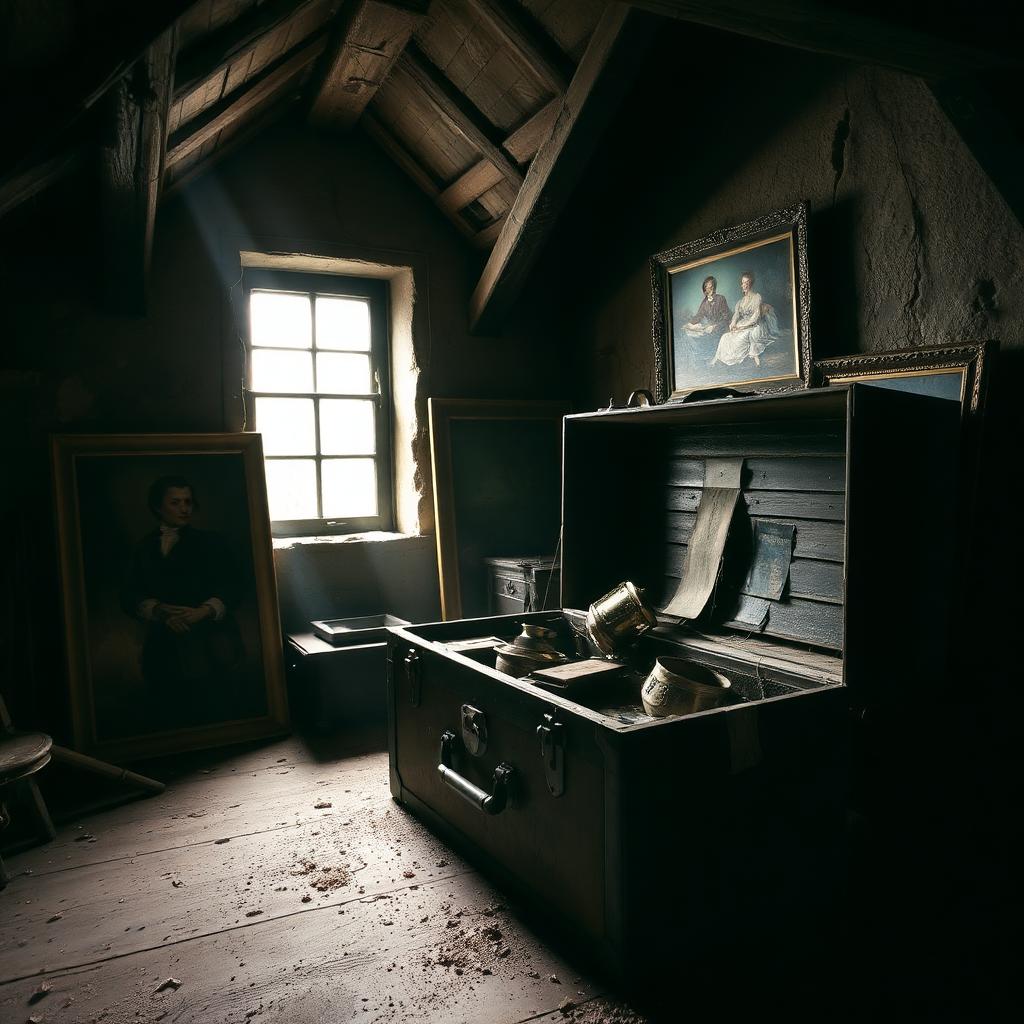
The mythical location, but not for the reasons people think. Most lofts don't contain a Van Gogh. They contain militaria, regimental boxes, packed-away collections and family papers. Anything fragile or temperature-sensitive will have suffered. Anything robust, medals, coins, metalware, often survives beautifully.
Room 5, The garage
The most overlooked room of all. Look for vintage tools, enamel signs, binoculars, railway items and militaria. The garage is where men of an earlier generation quietly stored the things they cared about, and the family rarely understands what's out there.
Room 6, The hallway cupboard
The wildcard. Many families use these as the dumping ground for inherited boxes, family keepsakes, old jewellery and "I'll deal with it later" items. Often the most surprising room in the house.
Room 7, The dining room
The obvious one, but still worth doing properly. Silver, cutlery canteens, presentation pieces, trophies, hallmarked salvers. The traditional silver-room categories.
Room 8, The desk drawer rule
Always open the desk drawer.
One of my personal rules. Small valuable objects, sovereigns, pens, watches, jewellery, foreign coins, presentation medals, end up in desk drawers because that's where people put things they don't quite know what to do with. The desk drawer almost always rewards the dealer who opens it.
Things people throw away by mistake
Not because people are careless, because they simply don't recognise what they're holding. Tarnished silver looks like scrap. Old medals look like junk metal. A bag of "foreign coins" can contain gold sovereigns. Slow down before any bin bag leaves a house clearance.
What I look for first, a checklist
The biggest surprise
Value often hides in small things. The largest object in the room is rarely the most valuable.
It's almost a rule of the trade. The enormous Victorian wardrobe is worth a fraction of the small velvet box on top of it.
Final thoughts from our experts
People often imagine treasure hunting involves discovering something extraordinary. In reality it usually involves noticing something ordinary that everyone else overlooked. That's the real skill, and once you develop it, you never quite look at a house the same way again.
Key takeaways
- Valuable items are usually hidden, not on display.
- Start in the main bedroom, jewellery, watches, sovereigns, cufflinks.
- The study reveals what the previous owner truly collected.
- Lofts preserve robust items beautifully, militaria, coins, metalware.
- The garage is the most overlooked treasure room in any British home.
- Always open the desk drawer. Small valuable things end up there.
- Slow down before anything leaves the house in a bin bag.
- Look first for gold, watches, medals, coins, silver, collections and paperwork.
- The largest object in the room is rarely the most valuable one.
Questions About This Lesson?
Leave a comment, ask an expert a follow-up question, or suggest a future lesson. Approved comments appear below to help the wider learning community.