
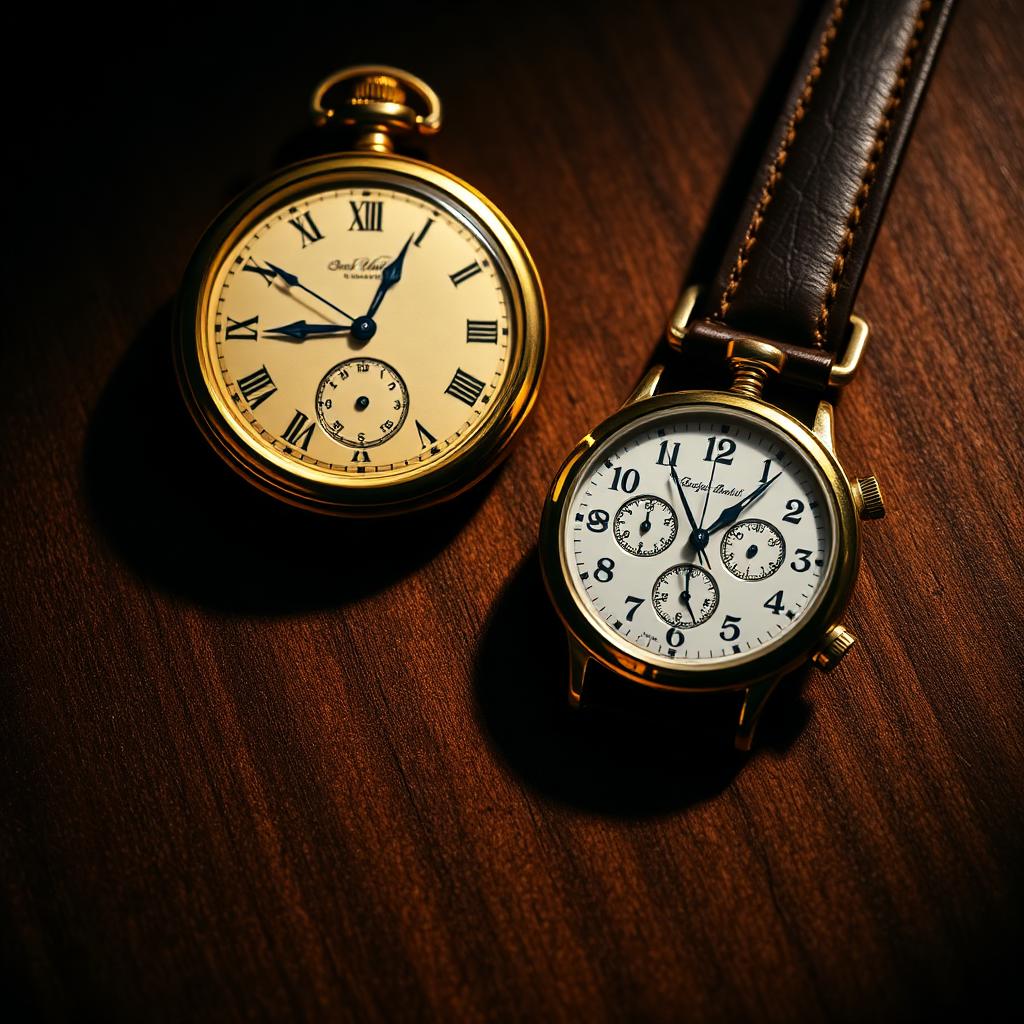
Two watches. Two very different decisions.
Imagine you're standing in front of a dealer.
On the left is a beautiful silver pocket watch made in 1905. On the right is a Rolex Submariner from the 1970s.
Both are old. Both are collectable. Both have history.
Yet one is an antique and one is vintage.
More importantly, owning them is a completely different experience. And that's where many buyers make their first mistake.
Why the industry gets this wrong
Just because a seller calls it "antique" doesn't mean it is.
Walk through any online marketplace, Facebook group, dealer site or auction listing and you'll see the same words used loosely , antique, vintage, rare, period, often interchangeably, often incorrectly.
A 1970s watch listed as "antique" isn't a small detail. It changes how a buyer values it, how it's insured, and what they reasonably expect from it. Terminology becomes blurred because there's no one policing it, which is exactly why buyers need to know the difference for themselves.
The timeline of a watch
Modern
0–20 years
Current production and recent releases.
Vintage
20–99 years
Recognisable era. No legal definition.
Antique
100+ years
Universally accepted across the trade.
There is no exact definition for vintage, different specialists draw the line at slightly different ages. The antique definition, however, is far more established. The 100-year rule matters because it's the one line the entire trade, customs, auctioneers, dealers and insurers, has agreed on.
What actually changes when a watch gets older?
Parts
Finding original components becomes progressively harder. A 1960s Submariner has a global parts network. A 1905 pocket watch often needs parts made by hand.
Servicing
Specialist knowledge increases. Fewer watchmakers can confidently work on early movements, and those who can charge accordingly.
Reliability
Modern expectations become unrealistic. Even a perfectly restored antique watch shouldn't be judged by quartz-era accuracy.
Wearability
Daily wear becomes less practical. Delicate cases, fragile dials and old crystals don't enjoy modern life.
The question most buyers forget to ask
"Is it original?", not "how old is it?"
Age tells you a date. Originality tells you what the watch actually is.
- Original dial
- Original hands
- Original crown
- Original movement
- Original case finish
A 1965 watch with a refinished dial, replacement hands and a polished case can be worth a fraction of an identical example that's been left alone. Originality, far more often than age, is what serious collectors are paying for.
A dealer's thought process
"When I first pick up a watch, I don't immediately ask how old it is. I start asking different questions. Has the dial been refinished? Do the hands match the period? Has the movement been altered? Are the serial numbers correct? Those answers usually tell me more than the age itself."
Beginners look at a watch and see a year. Specialists see a series of decisions, what's been kept, what's been changed, what's been hidden.
Why most buyers end up choosing vintage
Typical examples
- Vintage Rolex
- Vintage Omega
- Vintage Tudor
Why people choose them
- Easier servicing
- Better wearability
- Strong, active collector demand
- More practical day-to-day ownership
Vintage tends to sit in the sweet spot: old enough to have character and a collector market, young enough that you can actually live with it.
Antique watches: who are they really for?
Many people admire antique watches. Far fewer truly enjoy owning them.
Antique watches make sense for serious collectors, history enthusiasts, specialists and occasional-wear owners who treat them as objects rather than tools. If that's not you, that's fine, not everyone needs an antique.
Serial numbers: the truth detector
Every serious watch tells its story in four places: the dial, the case, the movement and, most importantly, the serial number.
Serial numbers let you verify age, confirm authenticity, date the piece precisely and research its production batch. When the numbers across dial, case and movement don't agree, the watch is telling you something, and it's usually not good news.
Five questions before buying any vintage watch
- 1.Has the dial been restored?
- 2.When was it last serviced?
- 3.Is it running correctly?
- 4.Are the parts original?
- 5.Can the seller explain its history?
Watches that have aged well
- Rolex Submariner
- Omega Speedmaster
- Omega Seamaster
- Longines dress watches
- Tudor Submariner
They've aged well because they were over-engineered when new, produced in numbers that created a real market, and tied to moments in history that collectors still care about.
Final thoughts from our experts
The biggest lesson isn't understanding the difference between antique and vintage. It's understanding what type of owner you are.
If you want something to admire occasionally and preserve as a piece of history, an antique watch can be fascinating. If you want something with history that you can still wear regularly, vintage is often the better choice. Neither is automatically better.
Key takeaways
- Antique = 100+ years. Vintage = ~20–99. Modern = under 20.
- Originality usually matters more than age.
- Vintage gives you collector appeal you can actually wear.
- Antique watches reward specialists, not everyday owners.
- Serial numbers across dial, case and movement should agree.
- The right watch is the one that suits how you'll use it.
Questions About This Lesson?
Leave a comment, ask an expert a follow-up question, or suggest a future lesson. Approved comments appear below to help the wider learning community.